Hubble mostly sees the light your eyes see. Webb mostly does not. Its instruments are tuned to the infrared, and that single design decision changes what the universe looks like.
Dust is transparent to the right light
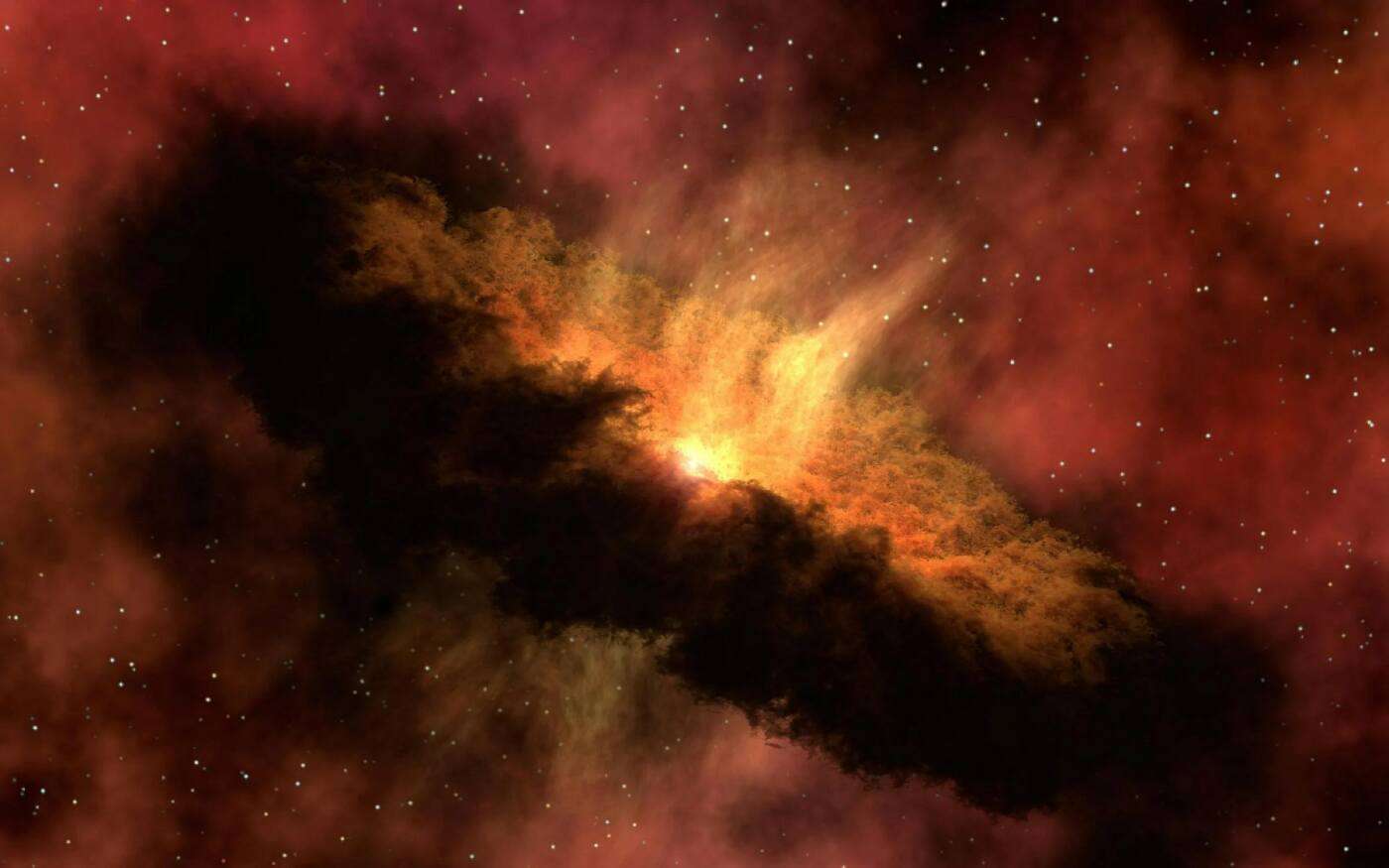
Stars are born inside cold clouds of gas and dust. Visible light scatters off dust grains the way headlights scatter in fog, so in Hubble's images those nurseries appear as dark, opaque blobs. Infrared light has a longer wavelength — it slips past grains that are smaller than the wave itself. Point an infrared telescope at the same cloud and the fog thins out. The protostars inside become visible.
Distance is a second reason
The universe is expanding, and light travelling across it gets stretched along the way. Visible light emitted by the earliest galaxies has been stretched so far that it now arrives as infrared. An optical telescope simply cannot register it. Webb can, which is why it reaches galaxies that formed within the first few hundred million years after the Big Bang.
The cost of working in the infrared
Anything warm glows in the infrared, including the telescope itself. Webb therefore has to run extraordinarily cold. Its five-layer sunshield, roughly the size of a tennis court, keeps the mirror and instruments in permanent shadow at around 40 kelvin — about −233°C. One instrument, MIRI, needs an additional cryocooler to go colder still.
That is also why Webb sits about 1.5 million kilometres from Earth rather than in low orbit: out at the second Lagrange point, the Sun, Earth and Moon all stay on the same side, so a single shield can block all three at once.